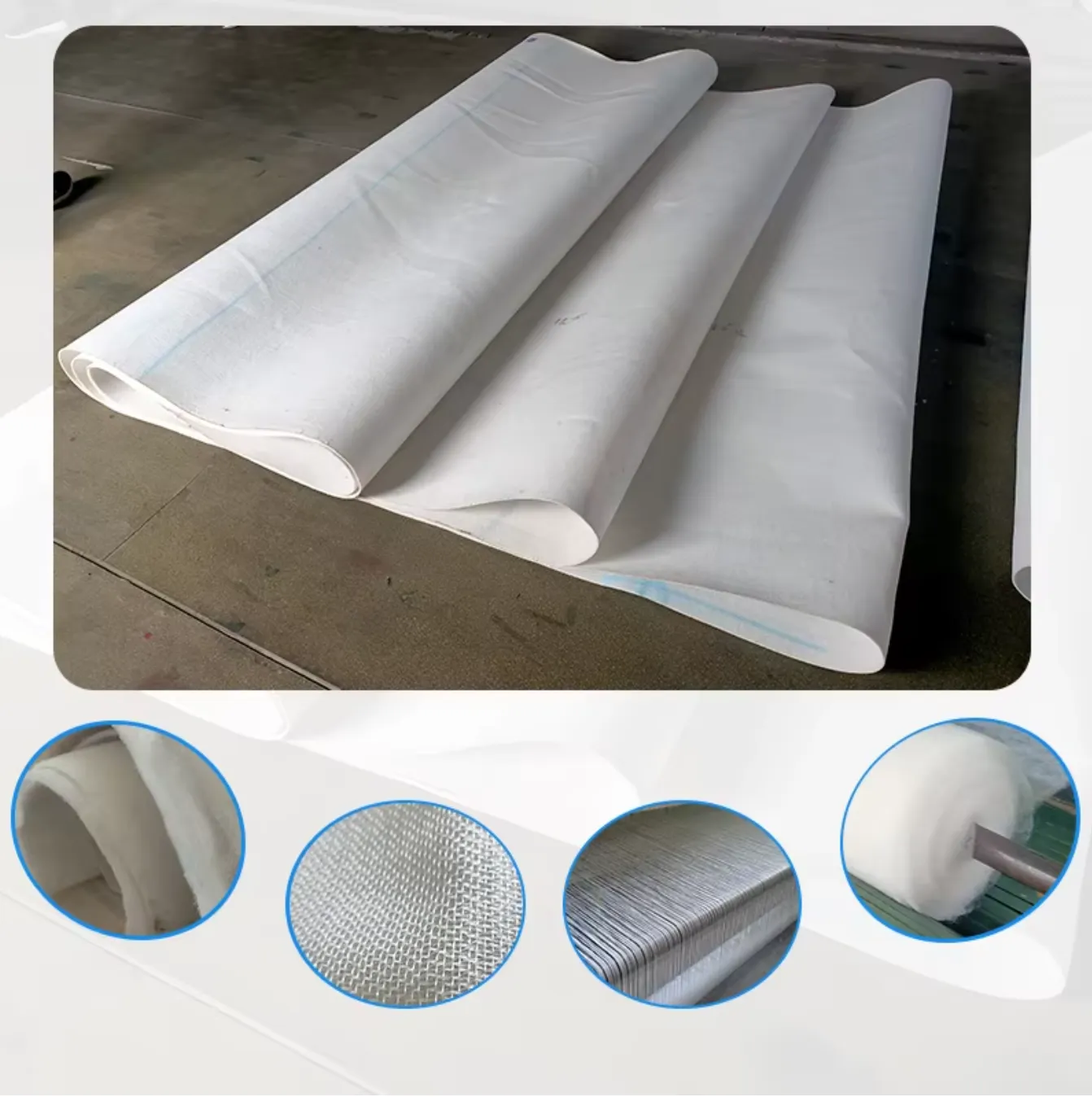
Selection Strategy for Press Felts
How to Select High-Quality Press Felts
1. Selection of Type, Grammage and Dimensions
Type Selection
Select the appropriate felt type based on factors such as paper machine type, machine speed, paper grade and press configuration. Modern papermaking felts are custom-engineered—each felt is designed and manufactured to meet the technical requirements of a specific position on a designated paper machine, tailored to parameters including machine speed, paper grade being produced and product specifications.
Grammage Selection
The grammage (mass per unit area) of a felt affects its water-holding capacity, dewatering efficiency and service life. Grammage selection should take the following factors into account:
- Paper machine speed: Higher machine speeds call for moderately lower grammage.
- Paper basis weight: Higher paper basis weights require moderately higher grammage.
- Press linear pressure: Higher linear pressure necessitates moderately higher grammage.
- Vacuum level: Higher vacuum levels allow for the use of felts with higher grammage.
Dimensions Selection
- Length: Refers to the actual length of the felt under tension, with consideration given to elongation variations.
- Width: Refers to the actual width of the felt under tension, taking into account shrinkage variations.
2. Selection of Air Permeability and Density
Air permeability is a critical parameter that determines the stable, high-efficiency operation of a paper machine and the service life of the felt.
Principles for Air Permeability Selection
- Paper machines with high vacuum levels and good washing conditions: Felts with relatively high air permeability can be used.
- Paper machines processing stock with high impurity content and prone to blinding: Felts with moderate air permeability are preferred.
- High-speed paper machines: Air permeability should be appropriately increased to reduce fluid resistance.
Density Selection
Density is an important indirect indicator of felt air permeability. Felts with moderate density (0.25–0.35 g/cm³) deliver optimal overall performance.
3. Special Requirements
Special felt properties are required to meet the needs of specialized paper machines and paper grades:
- Contamination resistance: For manufacturing paper with high filler content.
- Chemical corrosion resistance: For processing special stock (e.g., acidic stock).
- High-temperature resistance: For high-temperature pressing or special production processes.
- Special surface properties: For manufacturing paper with high smoothness.
Technical Considerations for Press Felt Selection
1. Selection Based on Paper Machine Operating Conditions
(1) Linear Pressure and Mechanical Load
There is a direct correlation between the linear pressure, mechanical load in the press section of a paper machine and the strength requirements of the felt.
- Impact of linear pressure: Higher linear pressure demands greater compressive resistance of the felt throughout its service life, along with excellent elastic recovery properties. These characteristics ensure the felt maintains good drainage performance and water-holding capacity over an extended period.
- Impact of mechanical load: Higher mechanical load requires the felt to have greater tensile (breaking) strength for power transmission, while minimizing elongation and shrinkage rates.
(2) Vacuum Conditions
The vacuum level of the paper machine system and the configuration of the vacuum system directly determine the moisture content, cleanliness and dewatering performance of the felt, especially the bottom mesh felt.
Consequences of insufficient vacuum:
- Poor dewatering of the wet web
- High moisture content in the felt
- Inability to achieve required press nip pressure
Consequences of excessive vacuum:
- Increased drive load on the paper machine
- Accelerated wear of wires and felts
Optimal vacuum range:
- Vacuum boxes: -40 to -60 kPa
- Vacuum press rolls: -50 to -80 kPa
- Vacuum transfer rolls: -30 to -50 kPa
(3) Washing Conditions
Washing conditions include the configuration of washing equipment, requirements for wash water quality, and the setting of wash water pressure and vacuum level. There is a direct correlation between washing conditions and cleaning effectiveness.
Classification of washing conditions:
- Low-pressure washing water (<0.3 MPa): Only low-basis-weight and thin felts are suitable.
- Medium-pressure washing water (0.3–0.5 MPa): Standard felts can be used.
- High-pressure washing water (0.6–3.0 MPa): High-basis-weight felts and bottom mesh felts are appropriate.
Water quality requirements:
- Suspended solids: <50 mg/L
- Hardness: <200 mg/L (calculated as CaCO₃)
Practical recommendations: When selecting a felt, its type, basis weight, structural ratio, manufacturing process and setting degree should be adjusted according to the paper machine's washing conditions to ensure compatibility with the machine's operational requirements.
(4) Stock Characteristics
Stock quality not only impacts the quality of the paper being produced but also plays a critical role in the drainage performance and service life of the felt.
Key influencing factors:
- Beating degree: Higher beating degrees result in poorer drainage performance of the felt.
- Filler viscosity: High filler viscosity increases the risk of felt blinding.
- Impurity content: High impurity content shortens the service life of the felt.
- pH value: Synthetic fiber felts are resistant to weak alkalis but susceptible to acids; the stock pH should be maintained within the range of 6.5–8.5.
Stock parameter control:
- Beating degree: Controlled appropriately according to paper grade requirements.
- Wet weight: Maintained within a reasonable range.
- Filler dosage: Restricted to the limits permitted by the production process.
- Chemical usage: Avoid the use of chemicals that are detrimental to the felt.
(5) Dewatering Method
The press configuration of a paper machine determines the dewatering method of the wet web, and different press configurations are suited to different types of papermaking felts.
- Paper machines primarily utilizing horizontal dewatering (e.g., conventional flat roll presses): Felts with high compressibility and low basis weight are preferred.
- Paper machines primarily utilizing vertical dewatering (combining press dewatering and vacuum suction, e.g., vacuum presses, grooved presses, blind-drilled presses): Felts with low compressibility, good elasticity and high basis weight are generally selected.
- Paper machines utilizing composite dewatering: The compressibility, elasticity and basis weight of the felt should be comprehensively evaluated based on the specific parameters of the press section.
Selection of bottom mesh layers: Under optimal operating conditions, felts with more bottom mesh layers can be used to extend service life and enhance dewatering efficiency. As a general guideline:
- 1–2 bottom mesh layers for vacuum presses
- 2–3 bottom mesh layers for grooved presses
- 2–4 bottom mesh layers for blind-drilled presses
2. Selection Based on Process Testing and Production Practice
The selection of felts for a specific position on a paper machine should be guided by the experience of felt manufacturers and papermaking professionals, which is typically derived from process testing and production practice.
Felt selection for new paper machines: For a new paper machine, simulation tests of press felts should be conducted at corresponding positions on similar paper machines. After the felts have been in operation, inspections and analyses should be performed, and the original design should be modified if necessary.
Felt inspection items:
- Visual inspection: Check for wear, blinding, fuzzing, damage, etc.
- Performance testing: Measure air permeability, thickness, grammage, strength, etc.
- Operational performance evaluation: Assess dewatering efficiency, web quality, service life, etc.
Optimization and adjustment: Based on inspection results, optimize and adjust parameters such as felt type, grammage and air permeability.
3. Economic Efficiency Considerations
Efficient wet pressing can reduce steam consumption, increase machine speed and minimize web breaks.
- Energy-saving effect: For every 1% increase in press dryness, steam consumption in the drying section can be reduced by approximately 3%–5%.
- Efficiency improvement effect: Optimized felt selection can increase paper machine speed by 5%–15%, leading to a corresponding increase in production output.
- Cost reduction effect: Extending felt service life by more than 30% lowers felt consumption costs.
- Quality improvement effect: Reduces paper defects such as picking, web breaks and felt marks, thereby increasing the finished product rate and improving paper quality.